Products
Orbinova Solutions Ltd — United Kingdom
Physical AI · June 2026 · 6 min read

Prometheus:Bezos's $18B bet on the physical world — and what it means for Europe

Jeff Bezos has quietly raised around $18 billion for Prometheus — an AI built to design and manufacture physical things, from jet engines to drug compounds. Almost no one in Europe is talking about it. Here's why his bet, Siemens' answer with NVIDIA, and one very blunt line from Siemens' own CEO add up to a fight for the factory floor.

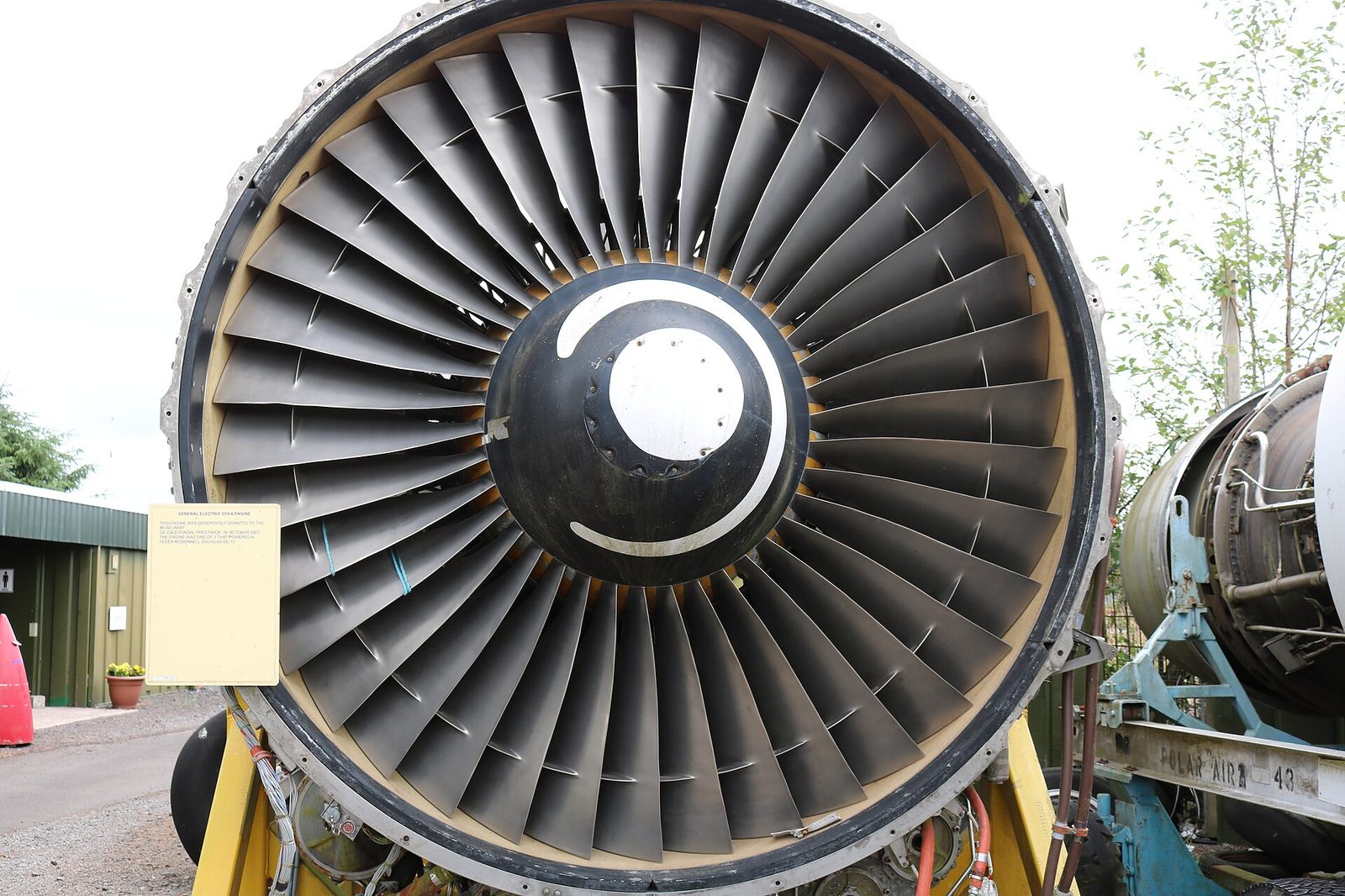
A General Electric CF6 turbofan jet engine seen head-on
Bezos keeps coming back to the jet engine: a decade to design, prototype and certify. Compress that loop and you don't have a better tool — you have a different economy. Photo: Wikimedia Commons.
Physical AI

Here's a number that should have made more noise in Europe than it did. On 11 June 2026, Jeff Bezos's new company, Prometheus, raised $12 billion in a single round — a Series B that values a seven-month-old startup at $41 billion. Add the $6.2 billion it launched with last November, and Bezos has now put roughly $18 billion behind an idea most people on this side of the Atlantic still haven't heard of. He's running it himself — his first chief-executive job since he left Amazon in 2021 — alongside the former Google and Verily scientist Vik Bajaj. For all that money the company is tiny: about 150 people, San Francisco, with small teams in London and Zurich.

And no, it isn't a chatbot. Bezos calls the goal an "artificial general engineer": software that collapses the distance between designing a physical object and actually making it. The examples the founders reach for are deliberately heavy — jet engines, drug compounds, semiconductors, bridges. Bezos keeps returning to the jet engine, which takes a team of engineers a decade or more to design, prototype and certify. Make that loop ten times faster, the pitch goes, and you haven't built a better CAD package. You've built a different industrial economy.

So look past the headline number at the shape of the thing. This isn't software sold by the seat. It's a bet on owning the loop by which the physical world gets designed and built — reportedly with the firepower to go and buy the companies that adopt it. That's not a vendor. That's vertical integration into industrial value creation itself, funded like a moonshot.
02Bits were the warm-up. This is about atoms.

The last three years of AI lived almost entirely in software — text, images, code. Prometheus is aimed at atoms, and that's the whole point. It's the last rung on the ladder Jensen Huang has been climbing on stage for years: perception, then generative, then agentic, and finally physical AI — models that understand and act in the real world. We wrote about that arc after GTC Taipei. Bezos has now strapped one of the largest private funding rounds in history to the top of it.

If there's a moat here, it's the loop itself. Whoever can design a part, simulate it against real physics, and push a proven change onto a line — quickly, cheaply, again and again — sets the cost curve for everything physical. That's a far bigger prize than any single product, and it's the only thing that explains how a company can be worth $41 billion before it has shipped a single engine.

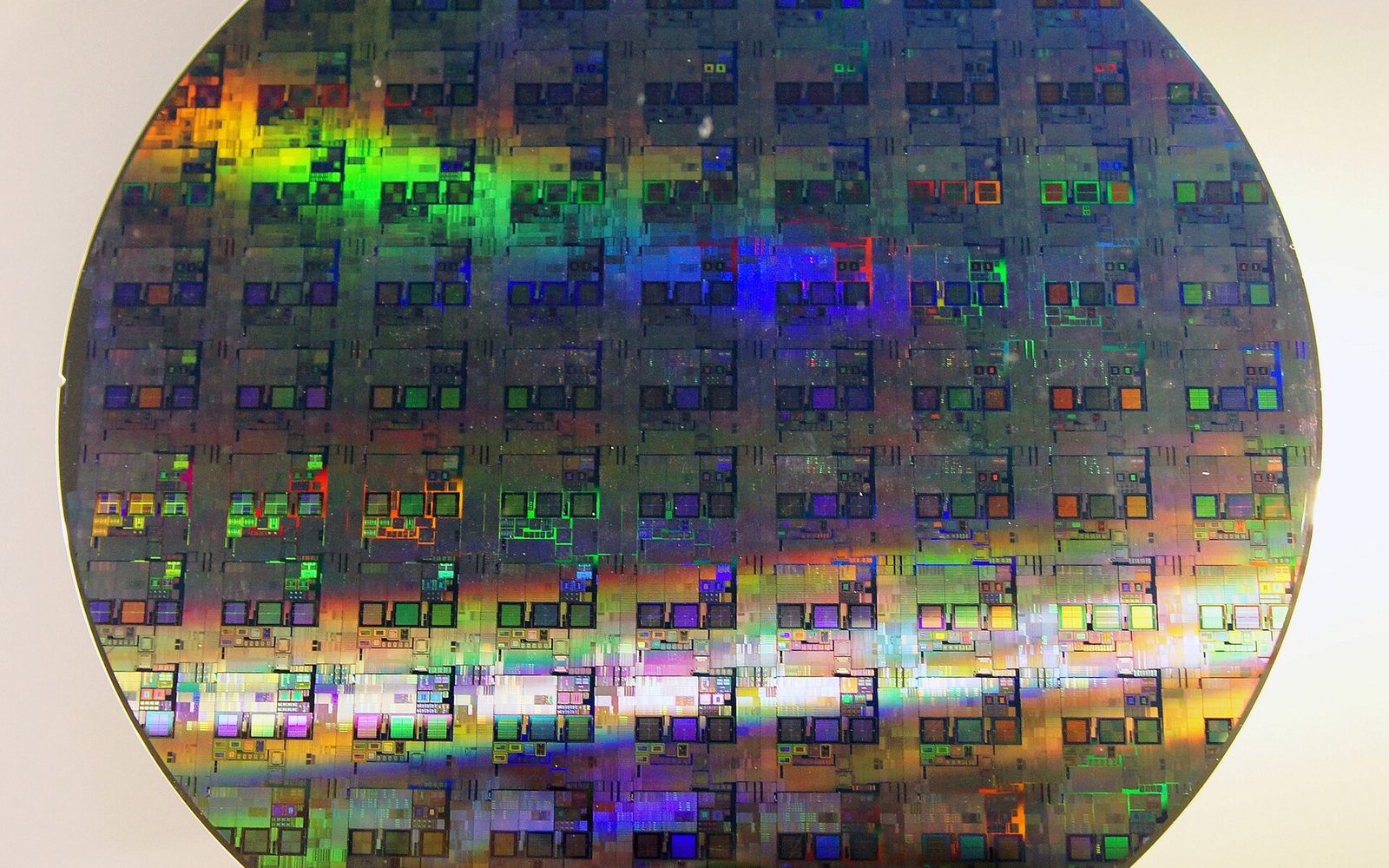
A 300 mm silicon wafer covered in a grid of microchip dies
Semiconductors are on the target list — the unglamorous, atom-level end of AI. Photo: Wikimedia Commons.
03Siemens isn't asleep. Europe might be.

To be fair, Europe isn't standing still. At CES 2026, Siemens and NVIDIA announced they're jointly building an "Industrial AI Operating System" — a stack spanning design, engineering, manufacturing and supply chains — and they've picked the Siemens electronics plant in Erlangen to become one of the world's first fully AI-run, self-adapting factories. On paper, that's exactly the right swing.

The trouble is where the money actually wants to go. In April 2026, Siemens chief executive Roland Busch told Bloomberg, more or less out loud, that he'd rather invest in the United States and China than in Europe — and that most of the company's roughly €1 billion industrial-AI budget is heading to the US. His reason: an EU AI Act and Data Act that, as he sees it, treat industrial AI as though it were a consumer app. "I can't explain to my shareholders why I'm investing money in an environment where I'm being held back," he said. When the boss of Europe's flagship industrial company says that on the record, it's worth listening.

Which points at the real risk. It was never that Bezos would come for Europe. It's that he won't have to. If the American platform is simply faster and cheaper to build on, the pull away from Europe writes itself — one engineering team, one factory, one funding round at a time. We outsourced the cloud a decade ago and still pay rent on it every month. The factory floor is the next thing on the table.

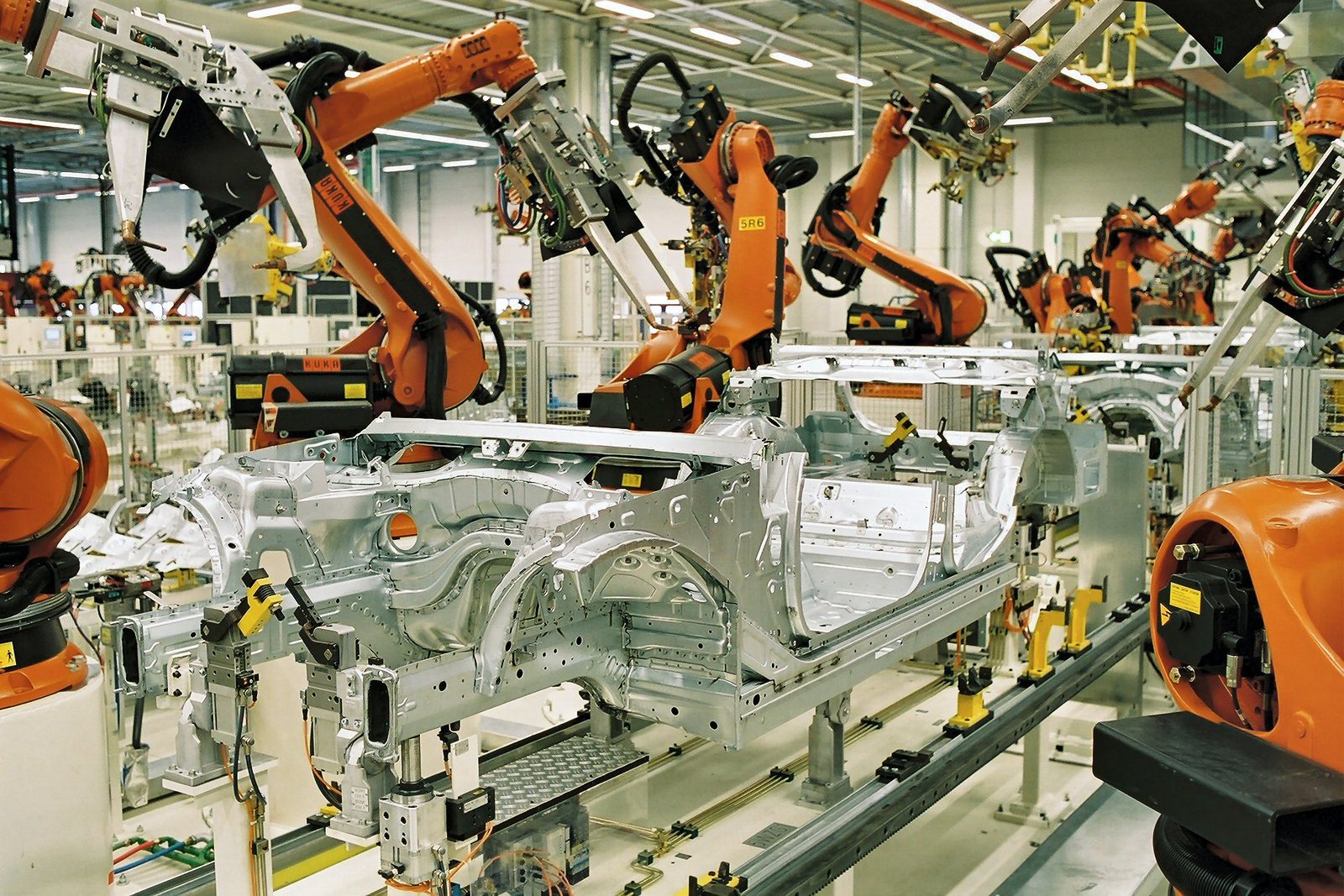
Orange industrial robots welding car bodies in a German automotive body shop
A German car body shop. Europe can absolutely build the factory of the future — the open question is whether it keeps the budget at home. Photo: Wikimedia Commons.
04The floor is the prize

Here's where we'd gently push back on the panic. The lesson of Prometheus isn't that physical AI now needs $18 billion and a Bezos. It's that the value in industry is migrating to whoever owns the operating layer of physical production — and that layer can be taken from the bottom of the market just as easily as the top.

Throwing money at compute won't close the gap on its own. You can spend billions on GPUs and still lose if the thing that actually touches the machine is slow, stuck in the cloud, or impossible to certify. What changes outcomes on a real floor is far less glamorous: physics-aware models running at the edge, on hardware a plant already owns; decisions made inside the loop, in weeks instead of years; and every one of them written to a signed, append-only record an auditor can trust.

That's the half of physical AI we build. Vertex-edge puts the model on the machine, Planova turns what it catches into an audit-ready record, and Horus-edge watches the perimeter — all of it built to run on a forty-machine job shop in the Midlands, not just a flagship fab in Erlangen or a lab in San Francisco. Nobody is going to hand Europe sovereignty over its own factory floor in a press release. It gets won the boring way: machine by machine, by the people who still own the floor — while they still own it.